
Table of Contents
What Is a Mass Air Flow Sensor (MAF Sensor)?
A Mass Air Flow (MAF) sensor is a sensor that measures the amount of air being drawn into the engine. The resulting measurement is typically used by the Engine Control Unit (ECU) to calculate the correct air-fuel mixture required for combustion to maintain the proper balance between air and fuel. Heisener, a leading online electronic parts and components supplier, offers a wide range of clamping diodes to meet the diverse needs of electronic circuit designers.
The working principle of an MAF sensor typically involves either a hot wire or a hot film. In a hot wire MAF sensor, a thin wire is heated to a constant temperature. As air flows over the wire, it cools down, and the sensor adjusts the electrical current to maintain the wire’s temperature. The amount of current required to keep the wire at a constant temperature is proportional to the mass of the incoming air. This data is then sent to the ECU, which uses it to adjust the fuel injection accordingly. In a hot film MAF sensor, a thin film is used instead of a wire, but the principle remains the same—monitoring the cooling effect of the incoming air to determine its mass.
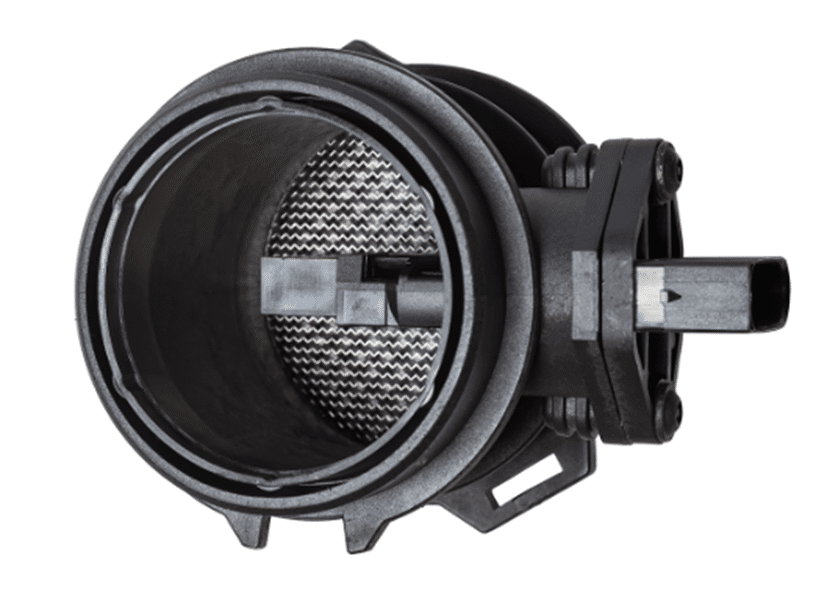
The Structure of MAF Sensor
The components of an MAF sensor include the sensing element, housing, and electrical connector. The sensing element, which can be a hot wire or hot film, is housed within a protective casing. It is responsible for measuring the air intake. The electrical connector links the MAF sensor to the ECU, transmitting the data about the air mass to the ECU. Additionally, some MAF sensors may include built-in temperature sensors to account for variations in air temperature.
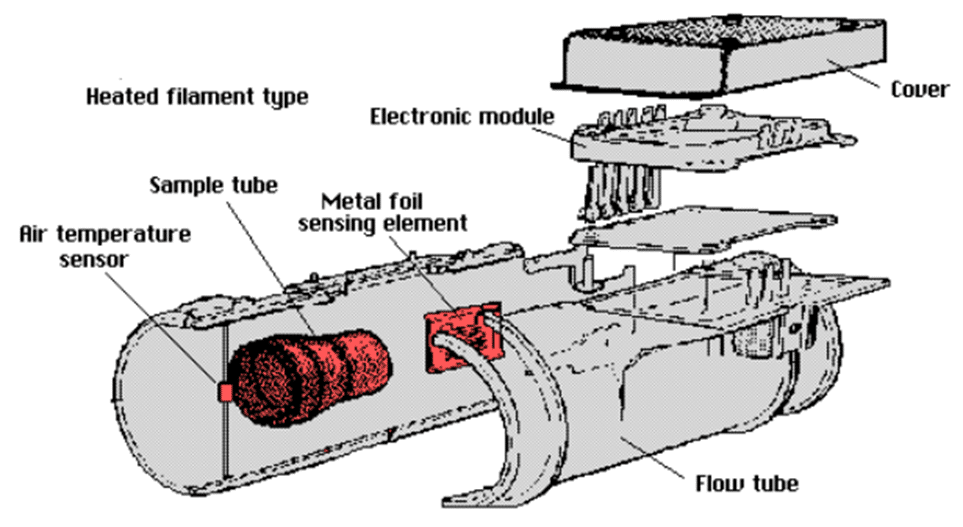
Functions of MAF Sensor
The mass air flow (MAF) sensor is a critical component in modern automotive engine systems. Its primary function is to precisely measure the mass of air entering the engine’s intake, providing this vital data to the engine control unit (ECU). By monitoring the real-time airflow, the MAF sensor enables the ECU to make accurate adjustments to fuel injection and ignition timing, ensuring the optimal air-fuel ratio is maintained for efficient combustion.
If the MAF sensor or its associated electrical circuit were to malfunction, the ECU would no longer receive the correct intake air volume signal. This would prevent the ECU from controlling the fuel injection amount properly, leading to an improper air-fuel mixture – either too rich or too lean. As a result, the engine would operate abnormally, potentially causing performance issues, reduced fuel economy, and increased emissions.
Beyond its core role in maintaining the air-fuel ratio, the MAF sensor also aids the engine’s adaptive learning capabilities. By providing real-time airflow data, the sensor allows the ECU to compensate for changes in variables such as altitude and ambient temperature. This adaptability helps optimize engine performance across diverse driving conditions and environments.
The MAF sensor plays a crucial diagnostic function. By detecting anomalies in the measured airflow, the sensor can help identify issues within the intake system, such as air leaks or clogged air filters. This provides valuable information to technicians for efficiently troubleshooting and resolving any problems affecting engine operation.
In summary, the mass air flow sensor is an indispensable electronic component in modern automotive engine management systems, serving critical roles in maintaining optimal engine performance, efficiency, and diagnostics. Its reliable, precise, and adaptive functionality is essential for the proper operation of the engine and related subsystems.
MAF Sensor Failures
Rough Idling
Cause: Incorrect airflow data causing improper air-fuel mixture.
Poor Acceleration
Cause: Faulty sensor misreporting airflow, resulting in inadequate fuel delivery and reduced engine power.
Decreased Fuel Efficiency
Cause: Inaccurate airflow readings cause the engine to run rich (excess fuel) or lean (insufficient fuel).
Engine Stalling
Cause: Incorrect air-fuel mixture causes the engine to cut out, especially during idle or low-speed conditions.
Check Engine Light Illumination
Cause: ECU detects abnormal MAF sensor readings and triggers diagnostic trouble codes (DTCs).
Rich or Lean Running Conditions
Cause: MAF sensor failure leading to incorrect fuel injection timing.
Contaminated Sensor
Cause: Dirt, oil, or debris accumulation on the sensor elements.
How To Maintain MAF Sensors?
- Use a cleaner to remove dirt and debris buildup on the sensor elements Regularly.
- Inspect the intake system for any leaks or cracks.
- When servicing the MAF sensor, handle it carefully to avoid physical damage. The sensor elements are delicate and can be easily damaged if mishandled or dropped.
- If using an oiled air filter, avoid over-oiling it as excess oil can contaminate the MAF sensor.
Pay attention to any signs of engine performance issues, such as rough idling, poor acceleration, or decreased fuel efficiency.
Please read the tutorials below.

Embedded Software | Firmware | Linux Devic Driver | RTOS
Hi, I am a tech blogger and an Embedded Engineer. I am always eager to learn and explore tech-related concepts. And also, I wanted to share my knowledge with everyone in a more straightforward way with easy practical examples. I strongly believe that learning by doing is more powerful than just learning by reading. I love to do experiments. If you want to help or support me on my journey, consider sharing my articles, or Buy me a Coffee! Thank you for reading my blog! Happy learning!
Share this:

Discover more from EmbeTronicX
Subscribe to get the latest posts sent to your email.