
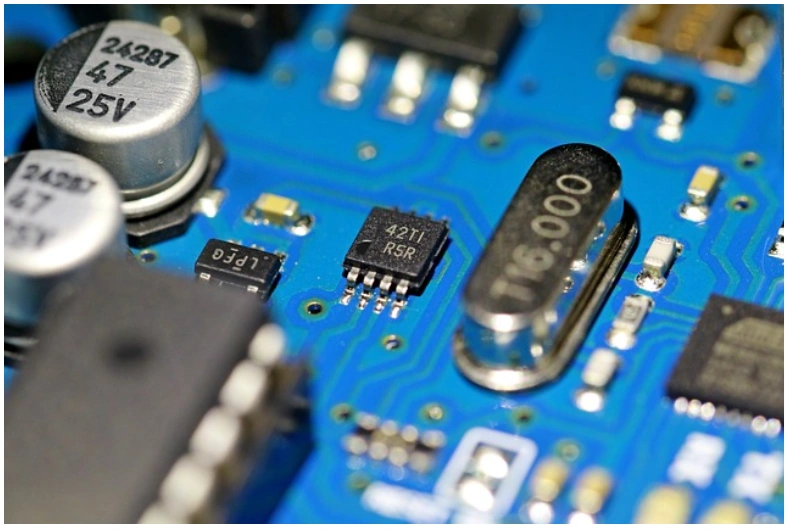
Microprocessors and integrated circuits (ICs) are two fundamental building blocks of modern electronics, but they serve distinct purposes and have different characteristics. Understanding the differences between these components can help clarify their roles in electronic devices and systems.
Table of Contents
What is an Integrated Circuit?

An integrated circuit, often abbreviated as IC, is a small semiconductor device that integrates a set of electronic components such as transistors, resistors, and capacitors into a single package. ICs are designed to perform specific functions, which can range from simple tasks like amplification and switching to more complex operations like signal processing.
Types of ICs
- Analog ICs: Used for processing continuous signals, such as amplifiers and oscillators.
- Digital ICs: Handle binary data and include components like logic gates and flip-flops.
- Mixed-Signal ICs: Combine analog and digital circuits for applications such as data converters and communication devices.
ICs are categorized by their functionality, size, and integration level, such as small-scale integration (SSI), medium-scale integration (MSI), large-scale integration (LSI), and very-large-scale integration (VLSI).
What is a Microprocessor?
Key features
- Instruction Set: A predefined set of commands that the microprocessor can execute.
- Registers: Small, high-speed storage locations for temporary data.
- Control Unit: Coordinates the activities of other components.
- Arithmetic Logic Unit (ALU): Performs mathematical and logical operations.
Examples of microprocessors include the Intel Core series, AMD Ryzen, and ARM processors.
Key Differences Between a Microprocessor and an Integrated Circuit
| Aspect | Integrated Circuit | Microprocessor |
| Definition | A semiconductor device that integrates multiple electronic components. | A specific type of IC designed to perform general-purpose computing tasks. |
| Functionality | Performs predefined or specialized tasks. | Executes a sequence of instructions for computing. |
| Complexity | Can range from simple circuits to highly complex designs. | Highly complex and specifically designed for computational tasks. |
| Examples | Operational amplifiers, timers, memory chips. | Intel i7, AMD Ryzen, ARM Cortex series. |
| Role | May act as a subsystem in larger devices. | Acts as the “brain” of a computer system. |
How is a Microprocessor Different from a Microcontroller?
In the world of electronics and computing, the terms microprocessor and microcontroller often surface, each playing a critical role in modern technology. Although they may seem similar, these components are designed for vastly different applications and offer unique capabilities tailored to specific needs.
What is a Microprocessor?
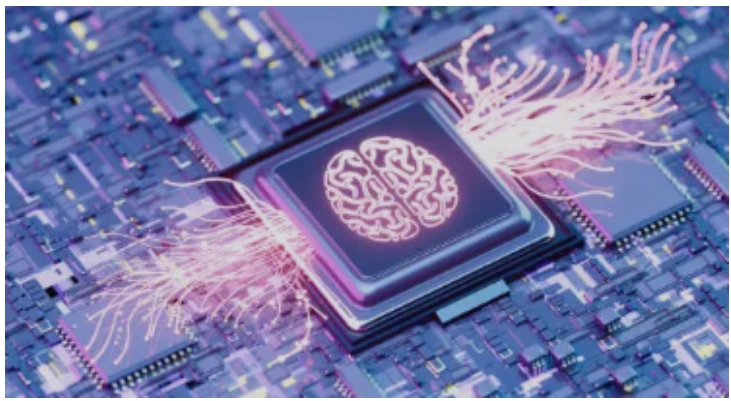
A microprocessor is the central processing unit (CPU) of a computer system. It is designed primarily for general-purpose computing and performs a wide range of tasks, from executing complex algorithms to supporting multimedia applications. Microprocessors are typically used in devices such as personal computers, laptops, enterprise servers, and workstations. Their primary features include:
- High Performance: Microprocessors are optimized for speed and can handle billions of instructions per second.
- Versatile Functionality: They support multitasking and can run a variety of operating systems and applications.
- External Components: To function, a microprocessor requires external components like memory (RAM and ROM), input/output interfaces, and storage.
- Scalability: Microprocessors are often used in systems that can be upgraded or expanded to meet higher computational demands.
What is a Microcontroller?
A microcontroller, on the other hand, is a compact, self-contained system that integrates a CPU, memory, and peripherals on a single chip. Microcontrollers are specifically designed for embedded applications where they control specific tasks within a larger system. Common uses include household appliances, automotive systems, medical devices, and industrial automation. Key characteristics of microcontrollers include:
- Integration: They include built-in memory (RAM and ROM), input/output ports, and peripherals, making them standalone systems.
- Energy Efficiency: Microcontrollers are optimized for low power consumption, making them ideal for battery-powered devices.
- Real-Time Operation: They are designed to process inputs and produce outputs in real time, ensuring immediate responses to environmental changes.
- Task-Specific: Microcontrollers are programmed to perform specific, repetitive tasks rather than general-purpose computing.
Example: STM32 Microcontrollers, Arduino Microcontrollers, ESP32 Microcontrollers. You can purchase Development Boards from ChipTronicX.
Conclusion
While all microprocessors are integrated circuits, not all integrated circuits are microprocessors. ICs encompass a broad range of electronic functions, while microprocessors are specialized ICs with a focus on computation and control. Understanding these differences is crucial for engineers, developers, and technology enthusiasts working with electronic systems.
You can also read the below tutorials.

Embedded Software | Firmware | Linux Devic Driver | RTOS
Hi, I am a tech blogger and an Embedded Engineer. I am always eager to learn and explore tech-related concepts. And also, I wanted to share my knowledge with everyone in a more straightforward way with easy practical examples. I strongly believe that learning by doing is more powerful than just learning by reading. I love to do experiments. If you want to help or support me on my journey, consider sharing my articles, or Buy me a Coffee! Thank you for reading my blog! Happy learning!
Share this:

Discover more from EmbeTronicX
Subscribe to get the latest posts sent to your email.