STM32 SD Card Interfacing with Example – STM32F103C8T6 Blue Pill Board
STM32 SD Card Interfacing

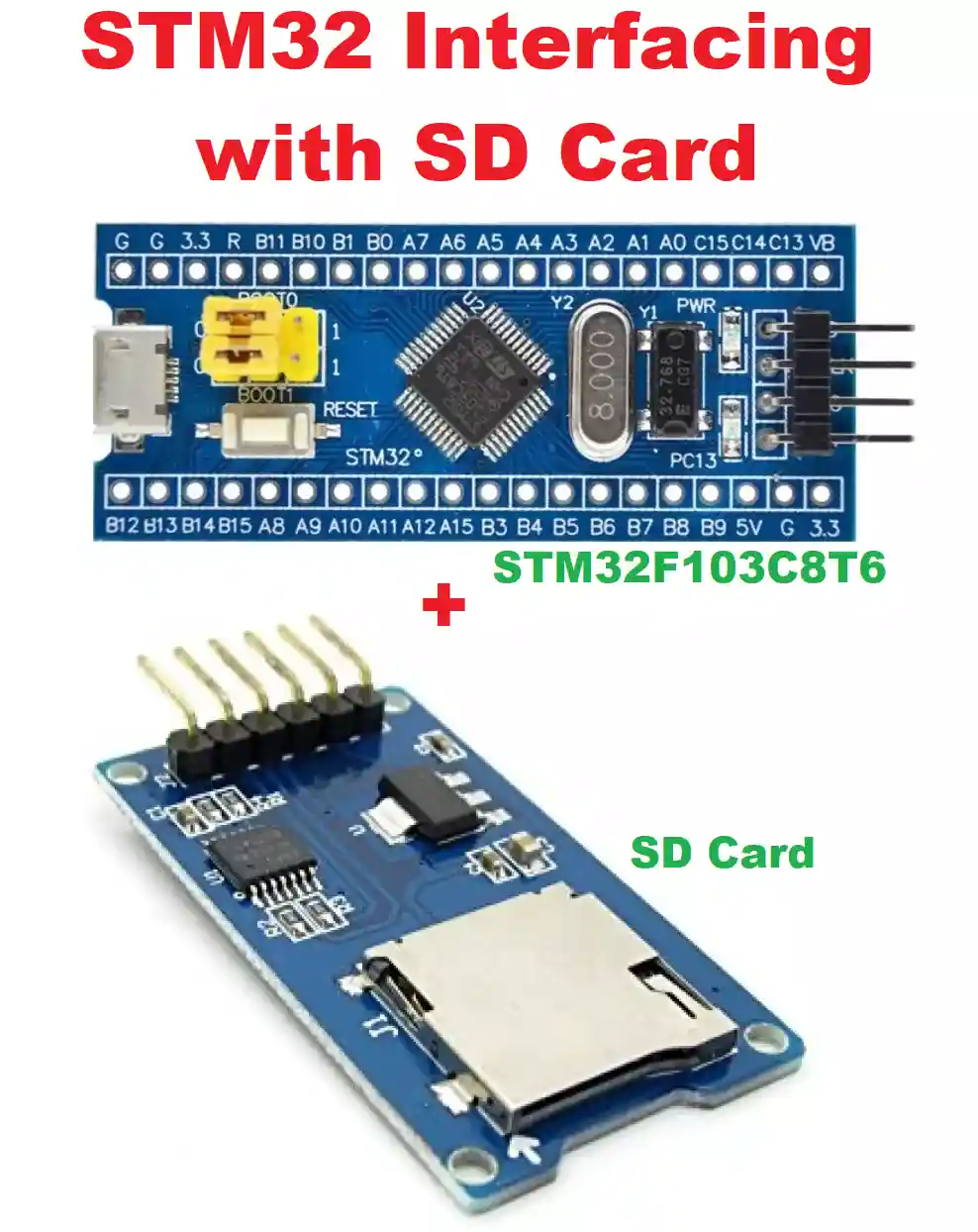
This is the Series of tutorials on the STM32 Microcontroller. The aim of this series is to provide easy and practical examples that anyone can understand. In this article, we are going to Interface the SD card with STM32 (STM32 SD Card) using SPI communication. In this demo, we have used the STM32F103C8T6 Blue Pill board. You … Read more
Understanding the Microcontroller GPIO – GPIO Working Explained

Understanding the Microcontroller GPIO

In general, whenever we learn a new programming language we used to write the “Hello World” program first. Likewise in the microcontroller, we try the LED Blinking program. To blink the LED, we need to access the  GPIO. If you are a programmer, you can just write “1” to the GPIO pin to make it … Read more

STM32 Firmware Update using SD Card – Bootloader Part 7

Firmware Update using SD Card

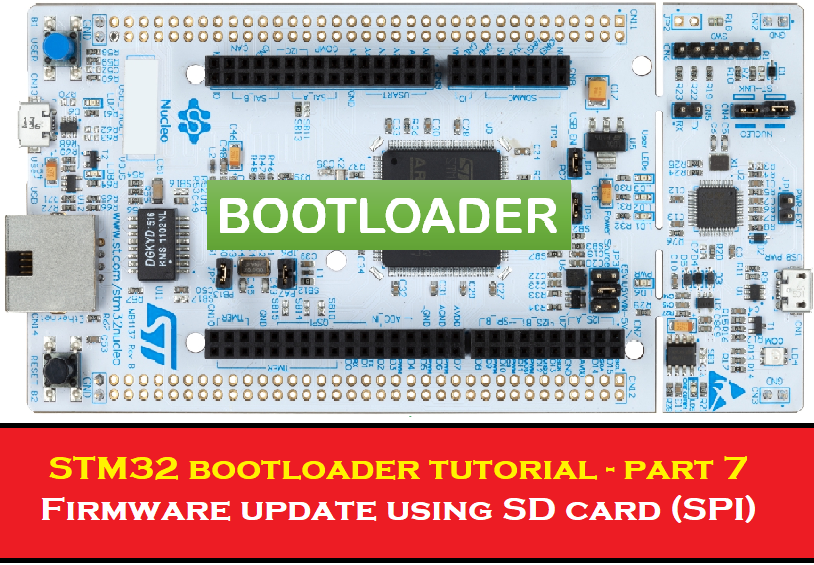
This article is a continuation of the Series on STM32 Bootloader and carries the discussion on Bootloader design and implementation. The aim of this series is to provide easy and practical examples that anyone can understand. This post is STM32 Firmware Update using SD card – Bootloader Tutorial Part 7.We have attached the video explanation also at … Read more

STM32 Bootloader Source Code – Bootloader Part 5

STM32 Bootloader Source Code

This article is a continuation of the Series on STM32 Bootloader and carries the discussion on Bootloader design and implementation. The aim of this series is to provide easy and practical examples that anyone can understand. This post is STM32 Bootloader Source Code – Bootloader Tutorial Part 5.We have attached the video explanation also at the bottom … Read more

STM32 Bootloader UART – Bootloader Tutorial Part 4

STM32 Bootloader UART

This article is a continuation of the Series on STM32 Bootloader and carries the discussion on Bootloader design and implementation. The aim of this series is to provide easy and practical examples that anyone can understand. This post is STM32 Bootloader UART – Bootloader Tutorial Part 4.We have attached the video explanation also at the bottom of … Read more

Bootloader Basics – Part 1

Bootloader basics

Recently, we have received the STM32 Nucleo-144 board. We thought of providing a Tutorial Series that explains How to design and write our own bootloader for STM32 Devices. Before start writing the code, we must know about what is the bootloader, and why it is required. This post will give you a basic understanding of … Read more

Vectored Interrupt Controller and Nested Vectored Interrupt Controller (VIC and NVIC)

Vectored Interrupt Controller and Nested Vectored Interrupt Controller

In this post, we will discuss about Vectored Interrupt Controller and Nested Vectored Interrupt Controller (VIC and NVIC).Please read the other STM32 Tutorials.ARM Arm Ltd. is a British semiconductor and software design company based in Cambridge, England. Its primary business is in the design of ARM processors (CPUs).They have started using the architecture from ARMv1 … Read more

STM32 RTOS – GPIO Tutorial (CMSIS V2)

STM32-RTOS-GPIO-Output

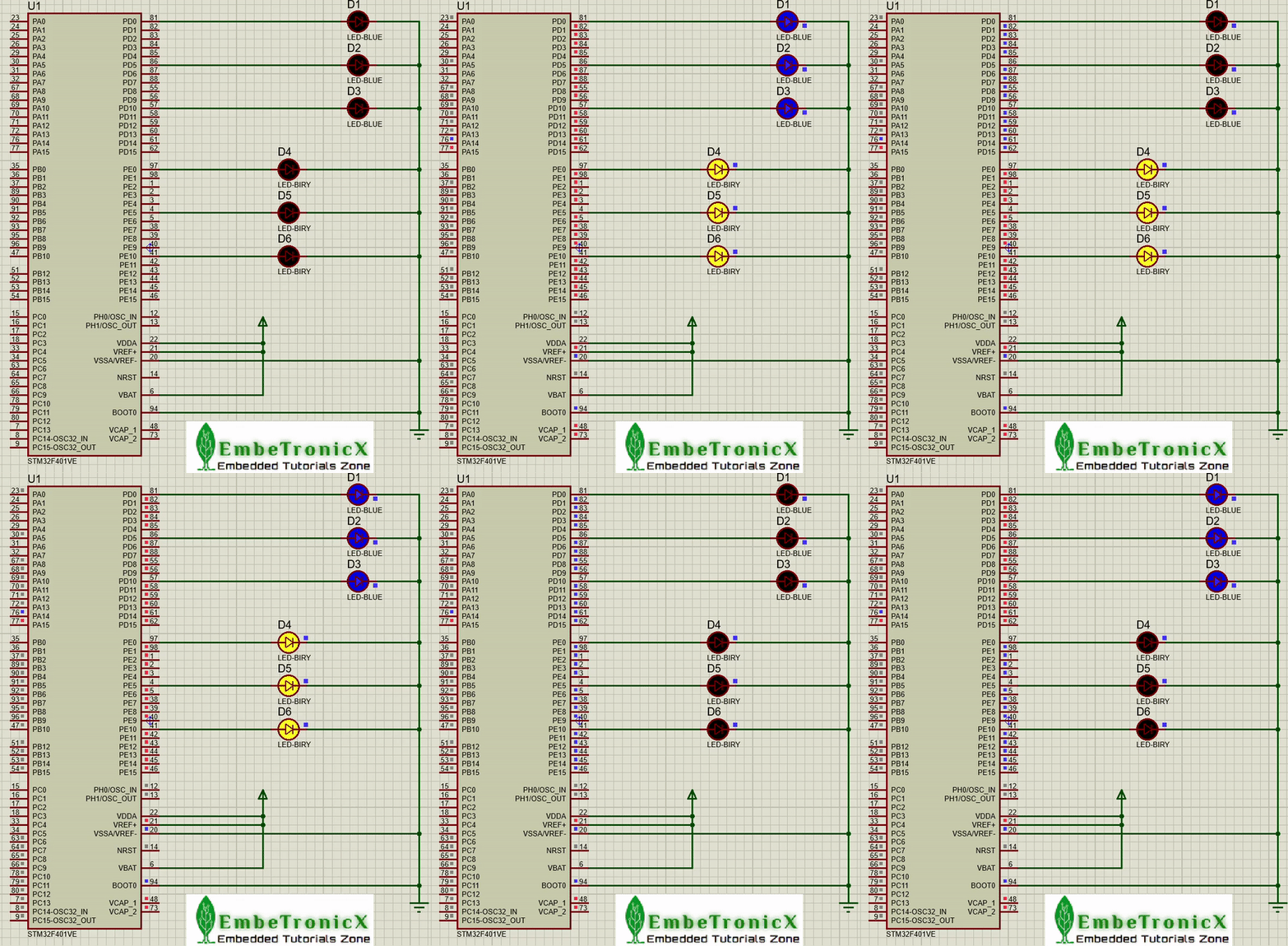
This is the STM32 RTOS (RTX-CMSIS) series. The aim of this series is to provide easy and practical examples that anyone can understand. Now in this tutorial, we are going to see “STM32 RTOS – GPIO Tutorial (CMSIS V2)“.Please read the other STM32 Tutorials.You can read LPC2148 RTX RTOS, a project creating for STM32 without RTOS, a … Read more

Getting started with STM32 RTOS – Project setup with Keil CMSIS

This is the STM32 RTOS (RTX-CMSIS) series. The aim of this series is to provide easy and practical examples that anyone can understand. Now in this tutorial, we are going to see “Getting started with STM32 RTOS – Project setup with Keil CMSIS“.Please read the other STM32 Tutorials.You can also read the STM32 Keil project, STM32 … Read more

STM32 GPIO Tutorial (LED and Buttons)- Bare Metal Part 2

STM32 GPIO Tutorial

This is the Series of tutorials on the STM32 Microcontroller. The aim of this series is to provide easy and practical examples that anyone can understand. Basically, you can write GPIO codes in multiple ways (Using HAL, the GPIO driver).Using that HAL you can finish your job in very few lines of code. But I would … Read more